







As St. Patrick’s Day approaches, excitement fills the air, especially for kindergarteners eager to catch a leprechaun. These mischievous little beings are known for their clever tricks and hidden pots of gold, making them the perfect subject for imaginative play. Creating a leprechaun trap not only sparks creativity but also encourages teamwork and problem-solving skills among young children.
Creative Leprechaun Trap Ideas
Creating leprechaun traps encourages creativity and problem-solving in kindergarteners. Here are some imaginative design options to inspire their projects.
Rainbow Trap Designs
Rainbow trap designs evoke the vibrant colors associated with St. Patrick’s Day.
- Styled Materials: Use colorful paper or fabric to create a rainbow effect.
- Attractive Elements: Incorporate shiny objects like gold coins or glitter to draw in leprechauns.
- Trap Mechanism: Design a simple pull string that releases a door when a leprechaun steps on it.
- Placement: Position the trap near windows or outdoors to capture leprechauns on their magical journeys.
Recycled Materials for Traps
Recycled materials provide an eco-friendly approach to building leprechaun traps.
- Cardboard Boxes: Turn old shoe boxes into trap bases.
- Plastic Containers: Utilize empty yogurt cups to create funnel-like entrances.
- Egg Cartons: Transform egg cartons to serve as the trap’s roof, adding decoration with paint and stickers.
- Paper Towel Rolls: Use them as tunnels leading to the trap, enticing leprechauns to explore.
These ideas promote resourcefulness while making leprechaun traps fun and sustainable projects for kindergarteners.
Building Techniques for Kindergarteners
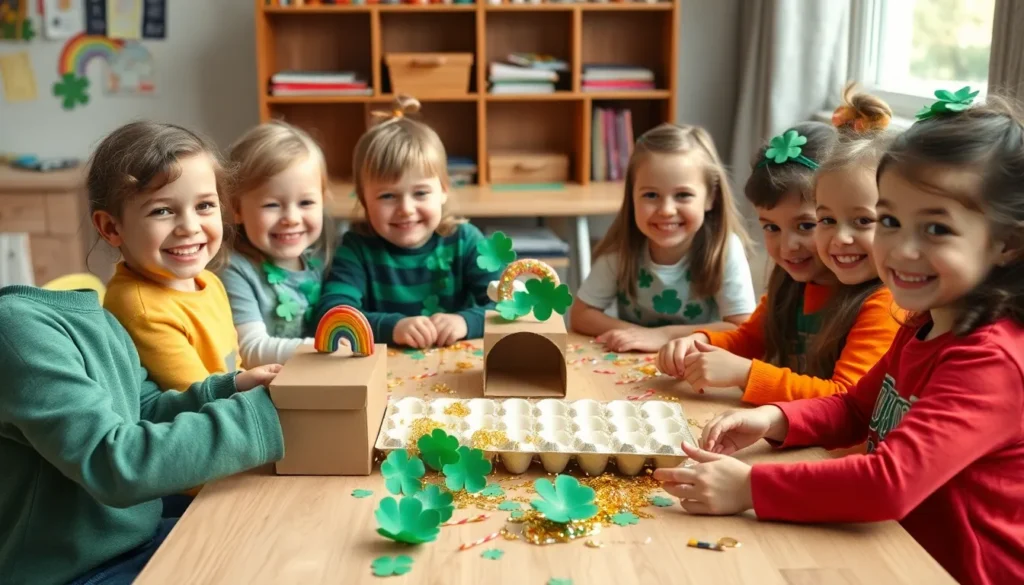
Building a leprechaun trap offers kindergarteners an opportunity to engage in hands-on learning while unleashing their creativity. Focusing on safety and simple instructions ensures a productive and enjoyable experience.
Safety First: Tools and Materials
Selecting safe tools and materials is essential for effective leprechaun trap construction. Kindergarteners should use non-toxic, child-friendly supplies. Consider these items:
- Cardboard boxes: Sturdy bases for constructing traps.
- Plastic containers: Easy to work with and lightweight.
- Egg cartons: Versatile shapes for creating trap components.
- Craft glue: Safe adhesive for securing materials.
- Kids’ scissors: Appropriate size for young hands.
Always supervise the use of scissors and other tools to ensure safety during the building process.
Step-by-Step Instructions
Follow simple steps to guide kindergarteners in creating their leprechaun traps. Each step promotes both engagement and learning.
- Decide on a trap design: Encourage creativity by allowing them to sketch or discuss different ideas.
- Gather materials: Collect chosen items and set them out on a workspace.
- Construct the base: Use a cardboard box or plastic container as the trap’s foundation.
- Add attractive elements: Decorate the trap with colorful materials, like paper rainbows or shiny foil, to lure leprechauns.
- Create a mechanism: Cut an opening atop the trap that can close with a simple flap, ensuring no leprechaun escapes.
- Finish with decor: Add themed elements like shamrocks or gold coins to entice leprechauns.
These steps provide a clear direction for kindergarteners to follow, fostering independence and teamwork through the building of their imaginative traps.
Incorporating Learning into the Project
Incorporating educational elements into creating leprechaun traps enhances the learning experience for kindergarteners. Engaging in this project fosters skills in math, art, and collaboration.
Math Skills through Measurement
Measuring materials provides hands-on math practice. Children can use rulers or measuring tapes to determine the dimensions of their trap’s base and height. Teachers can introduce concepts of length, width, and height. By cutting materials to specified sizes, kindergarteners reinforce numerical understanding and gain practical experience with tools, enhancing their spatial awareness.
Art and Craft Elements
Artistic expression thrives during this project. Kindergarteners can use vibrant colors, stickers, and glittery elements to decorate their traps. Teachers can introduce color theory and encourage creativity in design choices, allowing children to connect colors and themes. Crafting unique elements, like rainbow decorations or handmade signs, improves fine motor skills while reinforcing creativity and imagination, making the learning experience multifaceted.
Showcasing the Finished Traps
Displaying the finished leprechaun traps provides an opportunity for children to take pride in their creations. This moment fosters excitement and enhances the overall learning experience.
Classroom Display Ideas
Classrooms can transform into vibrant showcases filled with colorful leprechaun traps. Teachers can assign areas on bulletin boards or tables for each trap, allowing children to present their work. Incorporating themed decorations like shamrocks and rainbows creates an engaging environment. Using labels with each child’s name and a brief description of their trap’s design invites interaction and discussion among classmates. Setting up a “trap tour” day encourages students to walk around and share their designs, enhancing their public speaking and social skills.
Sharing with Parents and Families
Involving parents and families strengthens community engagement. Teachers can organize an event where children display their traps, inviting families to view the creations. Sending home photos and descriptions via newsletters or class websites keeps parents informed and engaged. Teachers can also encourage children to explain their traps at family dinner tables, reinforcing their communication skills. Offering opportunities for parents to participate in a post-creation reflection boosts pride in the children’s achievements and can foster discussions about creativity and collaboration at home.
Creating leprechaun traps offers kindergarteners a unique opportunity to blend creativity with learning. As they design and build their traps, children not only engage in imaginative play but also develop essential skills in math and art. The project fosters teamwork and problem-solving abilities, allowing kids to collaborate and share ideas.
Showcasing their finished traps boosts confidence and encourages communication, making the experience even more rewarding. By involving families and the community, the project strengthens connections and enriches the learning environment. Ultimately, leprechaun traps become more than just a fun activity; they serve as a valuable educational tool that leaves a lasting impression on young minds.