







Ever hit that “delete” button on your iPhone and instantly regret it? You’re not alone! Many users wonder just how long those recently deleted messages hang around before they vanish for good. Spoiler alert: it’s not as straightforward as you might think.
In a world where every text can feel like a mini-drama, knowing the lifespan of those deleted messages could save you from a message-meltdown. Whether you’ve accidentally wiped a heartfelt note or a vital piece of information, understanding the timeline can be your saving grace. So, let’s dive into the mysterious realm of iPhone message retention and uncover just how long you’ve got before those messages wave goodbye for eternity.
Understanding Recently Deleted Messages
Regretting the loss of messages is common among iPhone users. The recently deleted feature aids in recovering messages before permanent deletion.
The Purpose of Recently Deleted Folder
The recently deleted folder serves as a safety net for users. This folder holds deleted messages for 30 days. During this period, users can recover messages without difficulty. Accessing the folder provides an opportunity to prevent unintended loss. Understanding this retention period is crucial for those who value important correspondence.
How the Recently Deleted Function Works
When a message gets deleted, it moves to the recently deleted folder. This process allows a user to retrieve messages easily within the 30-day window. Automatic deletion occurs once the window closes, and messages disappear permanently. Users can manually delete messages from this folder anytime. The function ensures a simple way to recover deleted communications while safeguarding against accidental losses.
Timeframe for Deleted Messages
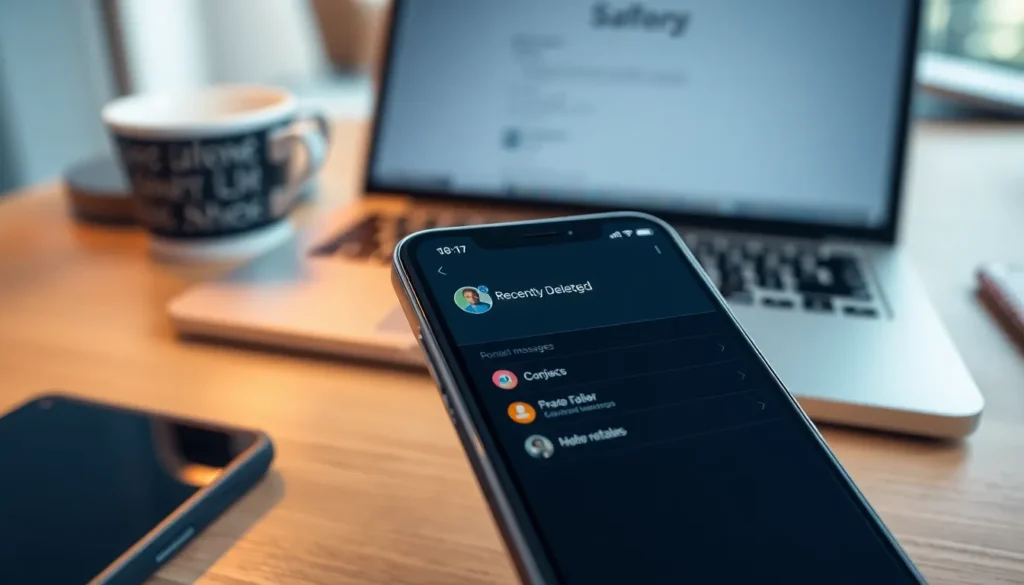
Recently deleted messages on an iPhone remain accessible for a specified duration before permanent deletion. Understanding this retention period is essential for users who may want to recover important conversations.
Default Retention Period
The default retention period for deleted messages is 30 days. During this timeframe, users can easily access the “Recently Deleted” folder within the Messages app. Messages deleted from the main inbox transfer to this folder, allowing a grace period for retrieval. After 30 days, messages in this folder undergo automatic deletion, meaning users lose access to them. It’s important for users to regularly check this section if they want to recover any deleted messages.
Factors Affecting Retention Duration
Several factors can influence the retention duration of deleted messages. Users who manually delete messages from the Recently Deleted folder will lose access immediately. Additionally, iOS updates or system settings may affect how deletion processes work. Device storage issues or backups can also impact message retention. Users taking regular backups can find messages restored in those backups, which could reflect different retention periods compared to messages in the Recently Deleted folder.
Recovering Recently Deleted Messages
Recovering recently deleted messages on an iPhone is straightforward, especially within the 30-day retention period. Users can access the “Recently Deleted” folder in the Messages app to restore their deleted messages easily.
Step-by-Step Recovery Process
- Open the Messages app on the iPhone.
- Tap “Edit” in the upper-left corner.
- Select “Show Recently Deleted.”
- Browse the list of deleted messages.
- Choose the messages to recover, then tap “Recover.”
- Confirm the restoration by tapping “Recover Message.”
Following these steps quickly restores deleted messages, maximizing the chances of retrieving important or sentimental content.
Limitations of Recovery Options
Recovery options come with limitations. Once the 30-day window expires, messages permanently erase from the Recently Deleted folder. Users can’t restore messages if they manually delete them from this folder before the retention period ends. Additionally, iOS updates may affect message recovery functionality. Users relying solely on backups may find that not all deleted messages are saved, depending on backup settings. Understanding these limitations helps users manage their message retention effectively.
Preventive Measures and Best Practices
Understanding how to keep messages safe proves essential for iPhone users. Employing preventive measures ensures important messages remain accessible.
Regular Backups
Regular backups guarantee the preservation of important messages. Users can use iCloud or iTunes to create these backups, ensuring data stays secure. iCloud offers automatic saving, making it convenient for daily use. For those who prefer manual control, using iTunes also works well. Backing up every week or after significant messages helps maintain records. Users restore messages from backups, providing another layer of security against unintended deletions. If a message gets deleted, it may return through a recent backup, granting peace of mind.
Managing Message Storage
Managing message storage plays a crucial role in retaining important communications. Users can access the settings to monitor message storage regularly. Deleting non-essential threads helps free up space and maintains organization. Enabling notifications for message storage limits ensures users stay informed about their device capacity. Regularly decluttering unnecessary conversations reduces the risk of accidental deletions. Awareness of settings and storage space also enables better control over message retention. Keeping essential messages grouped in a few organized threads helps users locate important information quickly.
Understanding the retention period for recently deleted messages on an iPhone is essential for anyone who values their digital correspondence. With a 30-day window to recover deleted messages users can take advantage of this feature to restore important conversations. However once this period expires those messages are permanently erased.
By implementing regular backups and managing message storage users can minimize the risk of losing vital information. Staying proactive ensures that important messages remain accessible and that the potential for regret over accidental deletions is significantly reduced. Embracing these practices can lead to a more organized and secure messaging experience on iPhones.